How to Build a Crypto Plan for the Next Cycle Using Brian Jung's Framework
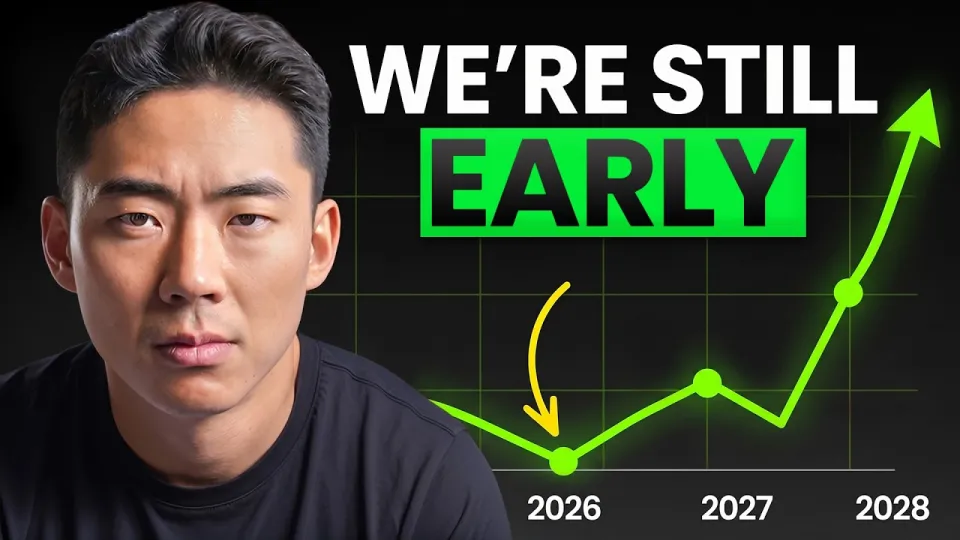
Video: my plan to make millions in crypto 2027
Want articles like this for your own video to promote it on YouTube and Google? Order them through the Telegram bot @sat_sit_bot. Articles with your video embedded are written and posted by the bot itself — on popular topical sites (no ads). Free trial — 50 articles.
· based on the channel Brian Jung
Key takeaways
- Brian Jung's video lays out a three-part plan: why he is bullish, which narratives drive the next cycle, and how he allocates capital.
- Core narratives named in the outline and tags: Bitcoin, Ethereum, altcoins, plus the SUI mention viewers flagged in the comments.
- The video points to Kaizen Pro as the paid research product and to a free market report newsletter as the entry-level resource.
- Viewer pushback centers on 2025 losses, bank control of crypto via CLARITY, and cycle-top timing debates.
- The plan format is allocation plus rules, not a single trade: sizing, narrative buckets, and exit criteria.
A crypto plan works when it fixes three things in advance: how much capital you will risk, which narratives you will hold, and what conditions force you to sell. Brian Jung's breakdown "my plan to make millions in crypto 2027" follows that structure, moving from his bull case to the narratives he expects to drive the next cycle and finally to his own allocation plan; the paid research tier behind it is available through Kaizen Pro, and a free market report newsletter sits one level below it.
Why the bull case comes first in any crypto plan
A bull case is not a prediction, it is the set of assumptions your position sizing depends on, so write it down before you buy anything. Jung opens the video with roughly ten minutes on why he remains bullish, which is the right order: if you cannot state the reasons you expect prices to rise, you have no basis for deciding how much to hold.
A workable bull case covers a handful of concrete inputs rather than vibes:
- Liquidity conditions, meaning whether money is expanding or contracting across risk assets generally.
- Adoption metrics that can be checked, such as ETF flows, stablecoin supply, or on-chain activity.
- Supply mechanics, including halving effects and how much of each asset is held by long-term wallets.
- Your own invalidation point, the specific event that would make you reduce exposure.
Writing those four lines down takes twenty minutes and prevents most of the damage that comes from buying on enthusiasm and selling on panic. It also gives you something to review when a cycle runs longer than expected, which is exactly the argument running through the comments under the video.
The narratives driving the next cycle
Narratives are the stories that pull capital into a sector faster than fundamentals alone would, and Jung spends the largest block of the video on them. The video's tags point at the broad buckets: Bitcoin, Ethereum, and altcoins. Ethereum matters as the settlement layer for most token activity, while altcoins are where the asymmetric bets sit, along with the risk of total loss.
Rather than buying one coin per story, treat each narrative as a bucket with a fixed share of your portfolio. A simple structure looks like this:
- A core position in Bitcoin as the least speculative part of the book.
- A large-cap layer in Ethereum and assets with real usage and fee revenue.
- A high-risk layer in newer narratives, capped at a share you can lose entirely.
- A cash or stablecoin reserve so you can add during drawdowns instead of selling into them.
One altcoin that viewers specifically noted in the comments was SUI, a reminder that individual names matter less than the rule that keeps any single position from ending your cycle. If one asset can wipe out your portfolio, the allocation is wrong regardless of how good the story sounds.
How to size positions so a single mistake cannot end your cycle
Position sizing is the part of a crypto plan that actually decides the outcome, because being right on direction is worthless if the position is too large to hold through a drawdown. A practical approach is to rank every idea by conviction and assign a maximum weight before entry.
- Define total risk capital first, the amount whose complete loss would not change your life.
- Cap any single altcoin at a small fixed percentage, for example 2 to 5 percent of that capital.
- Cap the entire high-risk narrative layer at a share you can defend in a bad month.
- Set the add and trim levels in advance, in writing, so decisions are mechanical.
- Rebalance on a schedule rather than on emotion, since cycles reward patience more than activity.
The comments under the video are a useful mirror here: one of the most liked replies says the same bullish message appeared in 2025 and the writer lost everything. That is not an argument against crypto, it is an argument for position sizing and for never letting a single narrative become the whole portfolio.
Reading regulation and bank involvement without panic
Regulation changes the risk profile of crypto rather than deciding whether it survives, and the most liked comment thread under the video argues that banks being rejected from direct crypto control may be better for the asset class. The point is worth taking seriously: rules that keep custody and settlement outside a small group of institutions preserve the reason many holders bought in the first place.
At the same time, regulatory clarity usually brings institutional capital, which tends to compress volatility and shift returns toward larger, more liquid assets. A plan should therefore state which side of that trade it is positioned for. If you expect institutional flows, weight Bitcoin and Ethereum more heavily; if you expect retail-driven narrative cycles, keep a smaller, disciplined allocation to newer tokens and accept that most of them will not survive.
A practical checklist for building your own crypto plan
A checklist turns a video into a decision process, so here is the version you can actually run this week. It converts the three parts of Jung's outline, the bull case, the narratives, and the allocation, into steps with outputs.
- Write your bull case in five bullet points and one invalidation condition.
- List three to five narratives and one or two assets inside each, with a reason for inclusion.
- Assign percentage weights to the core, large-cap, and high-risk layers, summing to 100 percent.
- Define entry, add, and exit rules for each layer in writing.
- Decide how often you will review the plan, for example monthly, and stick to that cadence.
- Track your thesis against reality: if the reasons for holding disappear, the position should too.
A plan with these six outputs is testable. You can look back at it in six months and see whether you followed it, which is a far more useful question than whether you were bullish or bearish on a given day.
Common questions traders raise about cycle timing
The most frequent doubt in the comments is timing, with some viewers arguing the cycle top will not arrive until 2029 and others warning that bullish calls repeat every year. Both concerns point at the same fix: build a plan that does not depend on calling the top.
That means using rules rather than forecasts. Trim into strength at predetermined levels, keep a reserve, and accept that you will never sell the exact top. A plan that survives being wrong about timing is worth more than a correct prediction you cannot act on, and it is the difference between a thesis and a bet.
Useful links
- Kaizen Pro access and waitlist
- Free crypto market report newsletter
- Brian Jung on X
- Brian Jung on Instagram
- Risks and disclaimers document
Final thoughts on planning instead of predicting
The value of Brian Jung's breakdown is that it treats a crypto plan as a document with allocations, rules, and invalidation points rather than a set of price targets. His sequence, bull case first, narratives second, allocation last, is repeatable whether or not his specific calls land. The comment section shows the real risk: traders who entered a previous cycle without sizing rules and lost everything, and traders who expect a top years away. A written plan with caps, a reserve, and review dates handles both cases better than conviction alone. If you want the research behind the framework, start with the Kaizen Pro waitlist and the free newsletter, and treat both as inputs to your own decisions rather than as financial advice.
Source: my plan to make millions in crypto 2027 · Markdown version
Questions & answers
What is the core crypto plan in Brian Jung's video?
The video is structured in three parts: the reasons he remains bullish on crypto, the narratives he expects to drive the next cycle, and his own allocation plan. The takeaway is a written plan with a bull case, narrative buckets, and position sizing rules rather than a single trade idea.
Which coins and narratives does the video focus on?
The video's tags and outline point to Bitcoin, Ethereum, and altcoins, with the SUI ecosystem noted by viewers in the comments. The larger point is to hold narratives as weighted buckets rather than concentrating everything in one token.
How much should a beginner allocate to altcoins?
There is no universal number, but a common approach caps any single altcoin at a few percent of risk capital and limits the entire high-risk layer to a share you could lose without changing your life. Bitcoin and Ethereum typically form the larger, lower-volatility core.
Is the cycle top really years away, as some viewers argue?
Nobody can confirm a top in advance, and comments under the video disagree on whether it arrives soon or years later. A plan that trims into strength at preset levels and keeps a cash reserve does not require you to be right about timing.